
How Far Do Cruise Ships Go From Shore?
Territorial sea, contiguous zone, EEZ and the open ocean.
Get a Free Cruise QuoteHow Far Do Cruise Ships Go From Shore?
How far do cruise ships go from shore? Sometimes a few hundred yards, as they glide past a harbor wall; sometimes hundreds of miles, in the middle of an ocean. What changes along the way is not just the view but whose rules apply. Here is how the sea is divided, measured in nautical miles from the coast.
The Maritime Zones
| Zone | Distance from the baseline | What the coastal country controls |
|---|---|---|
| Territorial sea | Up to 12 nautical miles | Sovereignty over the water, seabed and airspace; foreign ships have a right of innocent passage |
| Contiguous zone | Up to 24 nautical miles | Enforcement of customs, tax, immigration and sanitary laws |
| Exclusive economic zone | Up to 200 nautical miles | Rights over natural resources, research and environmental protection |
| High seas | Beyond national zones | No single country’s jurisdiction; the ship’s flag state rules apply on board |
These limits are described by NOAA’s Office of Coast Survey. They are measured from the baseline, normally the low-water line along the coast shown on official charts.
What Changes for Passengers
- Shops and casinos. Many ships keep their duty-free shops and casinos closed while in port or close to shore, opening them once the ship is under way and clear of local waters. The exact timing is set by the line and local law.
- Phone signal. Near the coast your phone may connect to land networks; farther out, the ship’s own maritime network or Wi-Fi takes over, often at different rates. Check with your carrier before you sail.
- The view. On scenic passages ships often sail close enough to see towns and cliffs; on open-sea legs there may be nothing but horizon.
How Far Is the Horizon?
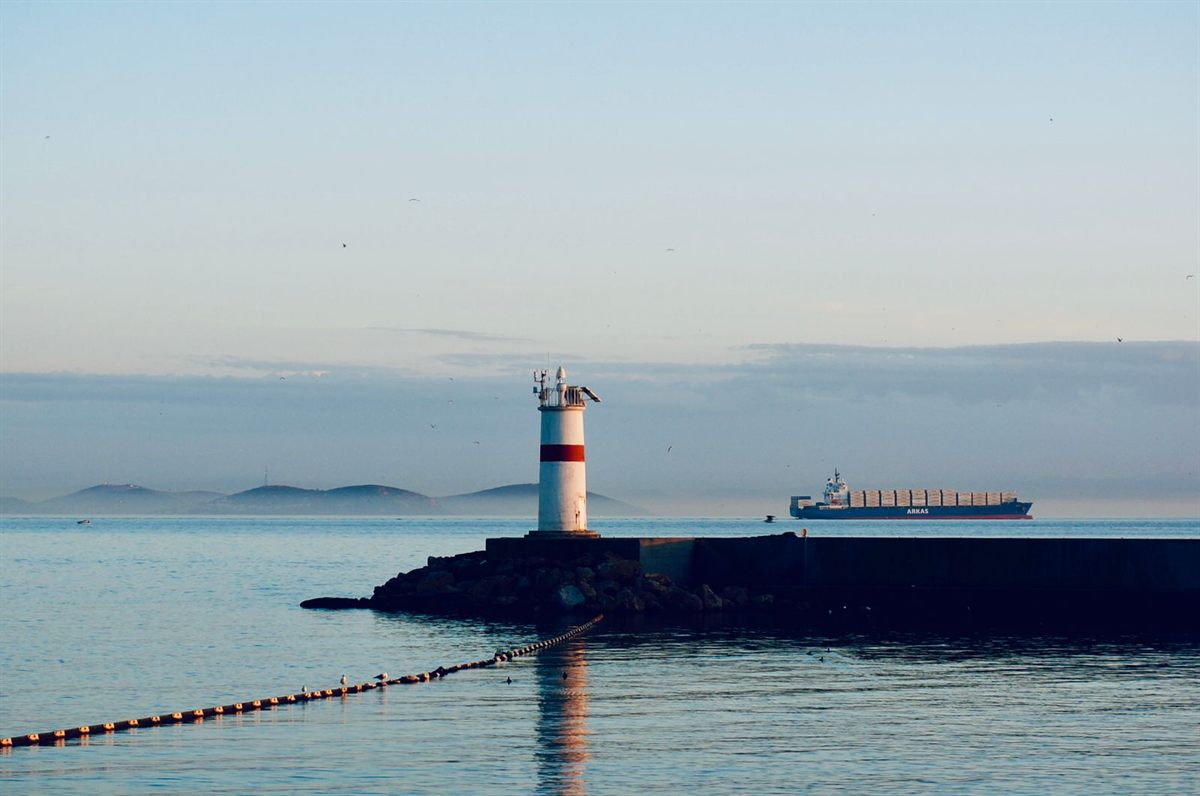
From a high deck the horizon feels endless, but it is closer than it looks. Navigators use a rule of thumb: the distance to the horizon in nautical miles is about 1.17 times the square root of the eye’s height in feet. From a deck about 100 feet above the sea, that is about 12 nautical miles — by coincidence, about the width of the territorial sea. Mountains and tall lighthouses can be seen much farther, because their tops rise above the horizon.
Close to Shore, Safely
Coastal sailing follows charted routes, traffic separation schemes and local pilotage rules, and many ports require a local pilot to board for the approach. If you are curious about how ships keep passengers safe at sea, our sister site Cruising Is Safe explains it calmly and clearly. For travel beyond the ship, the Official Travel Directory, the Official Cruise Directory and Best of the USA are our network’s directories, and Be a Travel Agent is there if you would like to sell cruises yourself.
Offshore Questions
How far offshore do cruise ships go?
It depends on the route. Ships often sail within a few miles of the coast when entering or leaving port or passing scenic coastline, and much farther out on open-sea passages. On an ocean crossing they can be hundreds of miles from the nearest land.
When does a ship reach international waters?
Beyond a country’s 12 nautical mile territorial sea, a ship is outside that country’s sovereign waters, although some rights extend further, to 24 and 200 nautical miles.
How far can you see from a cruise ship?
A navigator’s rule of thumb puts the horizon at about 1.17 times the square root of your eye height in feet, in nautical miles. From a deck about 100 feet above the water, that is roughly 12 nautical miles; tall coastlines are visible much farther away.
Prefer Scenic Coastal Cruising?
Some itineraries hug the coast; others head for open ocean. Our cruise advisors at Mister Cruise will match the voyage to the view you want. Free.
Get a Free Quote